
We Lost the Crown

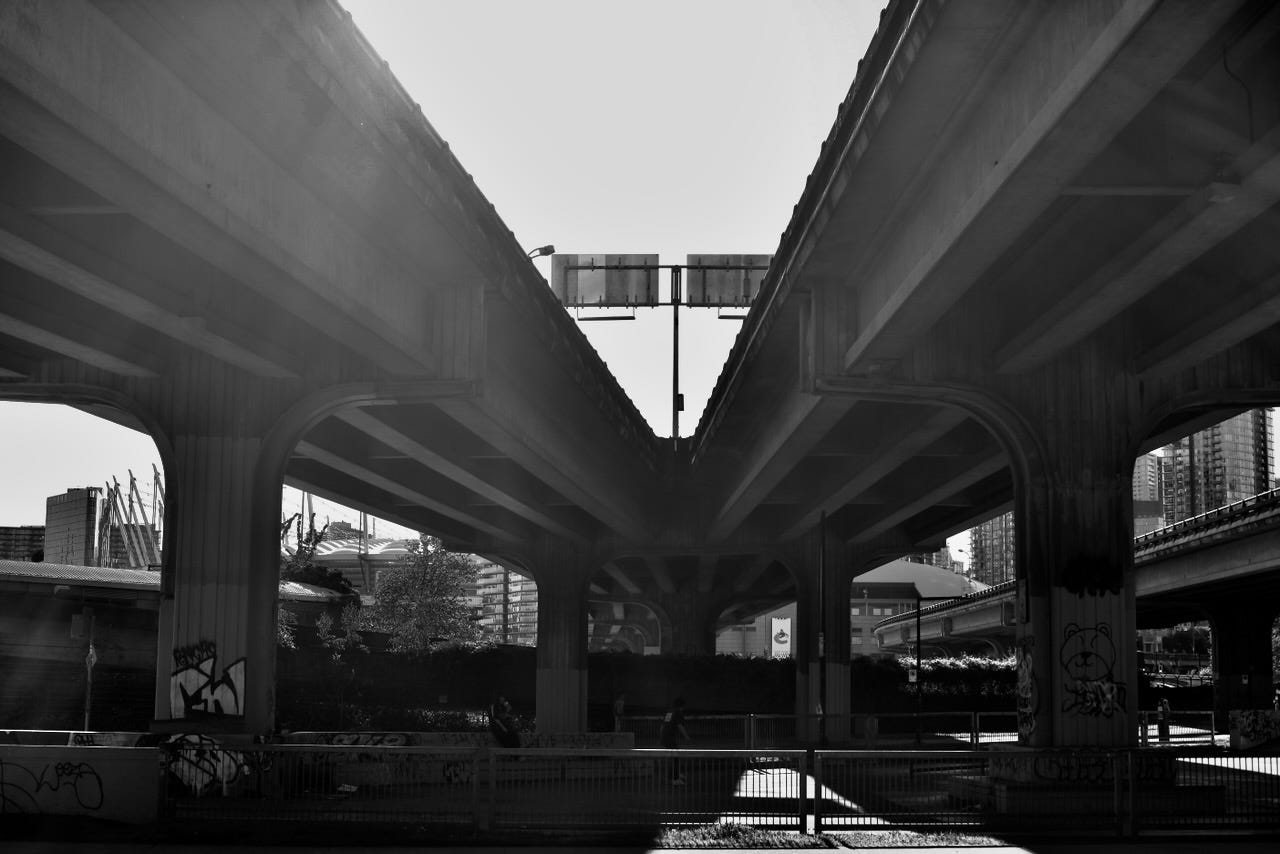
I remember when the first Deadpool shot in Vancouver. Ryan Reynolds, a Vancouver kid, bringing his movie home. The production closed the Georgia Viaduct for weeks. Deadpool 2 shut down large stretches of downtown. Both films were made here, by BC crews, using BC infrastructure, in BC locations. They were service productions (American IP, American studio money), but the work was ours.
Then came Deadpool & Wolverine.
At an industry mixer in LA in 2022, I spoke with a Marvel production executive working on the franchise. At that point, the production was still, potentially, coming to Vancouver. Hugh Jackman had just signed on, at a substantial upfront salary, and the math had changed. Without an above-the-line tax credit—the kind that applies to talent costs, not just crew and production spend—BC couldn’t make the numbers work for a film of that scale. The executive wasn’t unkind about it. It wasn’t a rebuke. It was just arithmetic. The production went to the UK, where the incentive structure covered what BC’s couldn’t.
Reynolds had still lobbied Marvel anyway. He said so publicly. He wanted to film where the franchise began, in his city, with the crews who had made the first two films. Shawn Levy, the director, is also Canadian, and had shot four films in BC before this one — the entire Night at the Museum trilogy and The Adam Project with Reynolds just two years earlier. These were not incidental connections. This was a director with a decade-long working relationship with BC crews, BC studios, and BC infrastructure. The creative team at the centre of this franchise wasn’t just BC-adjacent. They were practically BC residents. The creative team at the centre of this franchise was about as BC-adjacent as it gets. But when a lead actor commands that kind of fee, you need a jurisdiction whose program accounts for it. BC doesn’t.
The production was shot in England. Only a second unit came to Vancouver for exterior shots. The “Vancouver” street scenes in the film were shot on a set at Pinewood in Buckinghamshire because it was easier and cheaper than returning to Vancouver. A movie set in Vancouver, directed by someone who had shot four previous films here, was actually shot elsewhere.
And then—this is the part that actually hurts—when the film was released, its most celebrated sequences were built around cameos from characters whose films were made in BC. Blade. Elektra. Two X-Men Movies AND a Wolverine solo film. The Fantastic Four. The accumulated legacy of decades of Marvel production in this province is brought to life on screen as a loving tribute to Fox’s Marvel era. Shot at Pinewood. The movie was, in a way, a monument to everything BC had built. It just wasn’t built here.
BC’s approach to attracting production is built on a uniform incentive structure. Every qualifying production gets the same program. There are no deals. There are no special arrangements. There is no mechanism for going to Marvel and saying: This franchise belongs in BC, what would it take to keep it here?
I understand the rationale. Uniform programs are fair. They are administratively simple. They do not create the appearance of favouritism. Government agencies are not well-suited to negotiating individual deals, and there are reasonable arguments for why they should not.
But Deadpool & Wolverine grossed over one billion dollars at the box office. At the time of its release, it was one of the most expensive films ever made, with a gross production cost of over $500 million. A meaningful portion of that money—crew wages, facility rentals, equipment, location fees, catering, accommodation—would have stayed in BC if the production had filmed here. The multiplier effect on a film of that scale is substantial.
And it went to Pinewood.
BC used to be the destination for big-budget feature films. The first two Deadpool films. The Twilight-verse. The Night at the Museum-verse. Numerous Marvel productions before the studio built out its preferred infrastructure in the UK and Atlanta. We were the place productions came because our crews were experienced, our infrastructure was solid, our locations were versatile, and our incentives were competitive.
We are still those things. But we are not the only place where those things are anymore. The UK has built a formidable production infrastructure, backed by substantial government investment and incentive structures designed specifically to attract and retain large-scale productions. Australia has done the same. Ireland has done the same. These jurisdictions did not just offer programs. They competed. They made deals. They went after specific productions and specific studios and made the case that the work should happen there.
BC administers. It does not compete.
The distinction matters more than it might seem. A uniform program answers the question: What do we offer to productions that come here? Competing answers a different question: What would it take to make sure a specific production comes here?
Those are not the same question. When the production at stake is the third installment of a franchise that was born in your city, made by a director who knows your crews and set in your streets, the second question is the one worth asking.
I am not suggesting that every production deserves a bespoke deal. Most productions are well-served by a competitive, predictable incentive structure. But there is a category of production where the strategic value justifies a different approach. A billion-dollar franchise. A studio relationship that could anchor years of future work. A film so publicly associated with Vancouver that building its street scenes on a set in England is treated as a reasonable alternative to actually filming in Vancouver.
That category deserved a different approach. And nobody took it.
The result is not just the loss of one production. It is the signal sent to every major studio making decisions about where to locate large-scale productions. It is the precedent that BC’s offer is the same regardless of the relationship's strategic value. It is the message that there is no one in BC whose job is to sit across a table from a studio and say: “We want this production, here is what we are prepared to do.”
BC’s film industry is still strong. The infrastructure is still here. The crews are still here. The talent is still here. But the feature film business—the big-budget, international-profile productions that anchored the industry’s reputation—has been drifting. Not all at once. Not in a single dramatic moment. Quietly, production by production, toward jurisdictions that treat each major opportunity as a negotiation rather than an application.
Deadpool & Wolverine is one story. Ryan Reynolds publicly wanted to bring it home. He could not make Marvel do it. And nobody in BC was empowered to help him make that case.
That is not a problem that a better tax credit fixes. It is a problem that requires someone whose job is to complete this work. Not to administer a program. Not to process applications. To compete.
We had the franchise. We had the director. We had the star. We had the crew. We had the infrastructure.
We just did not make the deal. And we’ve lost the crown.